
Jáchymov: Communist-Era Czechoslovak Gulag
The Most Feared Prison in Communist Czechoslovakia
Jáchymov was once a city of glory. During the Middle Ages, it became the second-largest city in the Kingdom of Bohemia, made wealthy by its rich silver mines.
Today, it is a quiet spa town known for its radon baths and elegant historic buildings. Few visitors would guess that behind this peaceful landscape lies one of the darkest chapters of modern Central European history.
For thousands of Czechoslovaks, the name Jáchymov never represented healing. Instead, it became a symbol of fear, forced labour, political persecution, and the communist regime’s fight against its own citizens. The abandoned uranium mines and prison camps surrounding the town have since earned the nickname “the Czechoslovak Gulag.”
A Prison Hidden Behind the Iron Curtain
Following the communist coup of February 1948, the new regime began removing anyone considered politically unreliable. Democratic politicians, priests, intellectuals, students, entrepreneurs, former resistance fighters, and ordinary citizens could all become enemies of the state.
Many were sentenced in staged political trials and transported to labour camps around Jáchymov.
Their crime?
Sometimes it was telling a joke about the Communist Party. Listening to foreign radio broadcasts. Attempting to cross the border. Believing in democracy. Or simply being in the wrong place at the wrong time.
For many prisoners, the journey to Jáchymov was not punishment for a violent crime, but for an opinion, a belief, or an action that the new regime considered dangerous.
Why Uranium Mattered So Much
The prisoners were sent to Jáchymov for one reason: uranium.
The Ore Mountains contain some of Europe’s richest uranium deposits. As the Cold War began, uranium became one of the world’s most strategic resources, and Czechoslovakia became one of the Soviet Union’s key suppliers for its nuclear programme.
The uranium agreement with the Soviet Union had been signed already in 1946, before the communist takeover. Czechoslovakia supplied uranium at a price far below the world market value, while the agreement remained secret for decades.
Following the nationalisation of the mines in 1948, the newly appointed director of the state-owned mining company became one of the regime’s first political prisoners. His knowledge of the uranium industry made him inconvenient for the new authorities.
Political prisoners soon became a major part of the workforce. Around 3,000 prisoners from the Soviet Union were also transferred to Czechoslovakia as forced labour for the uranium industry.
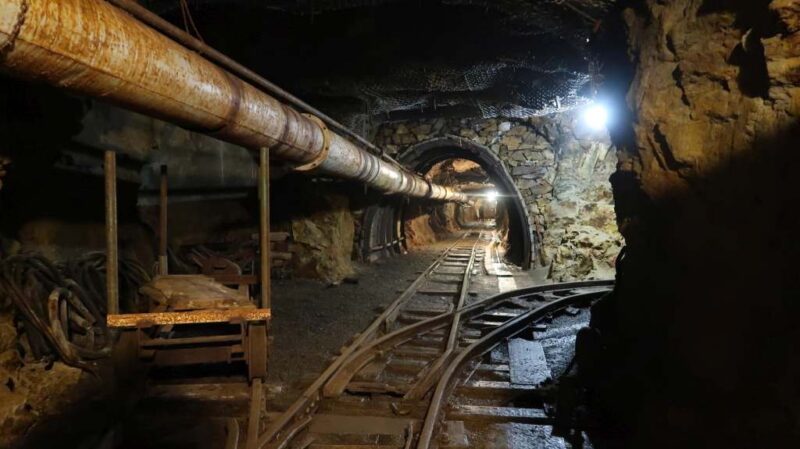
Working underground was physically exhausting and dangerous. Prisoners spent long hours in narrow tunnels filled with radioactive dust, often with little or no protective equipment. Many suffered serious health consequences that followed them for the rest of their lives.

Life Inside the "Czechoslovak Gulag"
Between 1949 and 1961, a network of prison camps surrounded the mines.
Prisoners were frequently transferred between camps, making it difficult to understand their surroundings or build relationships with people outside the prison system.
Civilian miners also worked in the uranium industry. Unlike prisoners, they usually performed less dangerous tasks and received exceptionally high salaries. Communist propaganda presented them as model citizens sacrificing for the socialist state.
Life in the camps was designed to break both body and spirit. Prisoners spent their days deep underground extracting uranium in hazardous conditions. Food was scarce, clothing was inadequate for the harsh mountain winters, and guards maintained constant surveillance.
Those who failed to meet production quotas could face punishment, solitary confinement, or extended sentences.
The work underground was originally limited to two years, but after judicial reforms in 1951 this protection disappeared.
For many prisoners, entering the uranium mines meant losing any certainty about when—or whether—they would ever return home.

The Mauthausen Stairs
One of the most haunting places in Jáchymov is the staircase leading from the former Svornost prison camp to the mine.
Today it is known as the Mauthausen Stairs, a name recalling the infamous concentration camp in Austria.
Former prisoners recalled that those who attempted to escape and were killed had their bodies left at the bottom of the stairs. Every morning, prisoners walked past them on their way to work underground.
The scene served as a brutal warning to anyone who considered escape.

The Red Tower of Death
Just outside Jáchymov stands one of the strongest reminders of the communist prison system – the Red Tower of Death.
Here, uranium ore from the surrounding mines was collected, sorted, and processed before being shipped to the Soviet Union. Much of the work was carried out manually by political prisoners who handled radioactive material with little or no protective equipment.
The prisoners were never informed about the dangers of radiation exposure. Many only discovered the consequences years after their release, when serious health problems appeared.
Today, the Red Tower stands as a symbol of the human cost behind the Cold War race for nuclear power.

Faith Underground
Faith survived even where freedom did not.
Before descending into the mine, many prisoners quietly prayed, following a tradition that had existed among miners for centuries. They looked to Saint Barbara, the patron saint of miners, and Saint Procopius for protection underground.
The communist authorities attempted to suppress these religious traditions. During the 1950s, the statue of Saint Barbara was removed from one of the mines.
What followed was an unusual moment of unity. Civilian miners and prisoners together protested and sent a letter demanding that the statue be returned. Because stopping uranium production would have threatened deliveries to the Soviet Union, the authorities eventually backed down.
The statue was returned, and the incident was quietly forgotten.
Visiting Jáchymov Today: A Place Where History Remains Hidden
Unlike many historical sites, Jáchymov has never become a major tourist destination. Perhaps that is what makes visiting it so powerful.
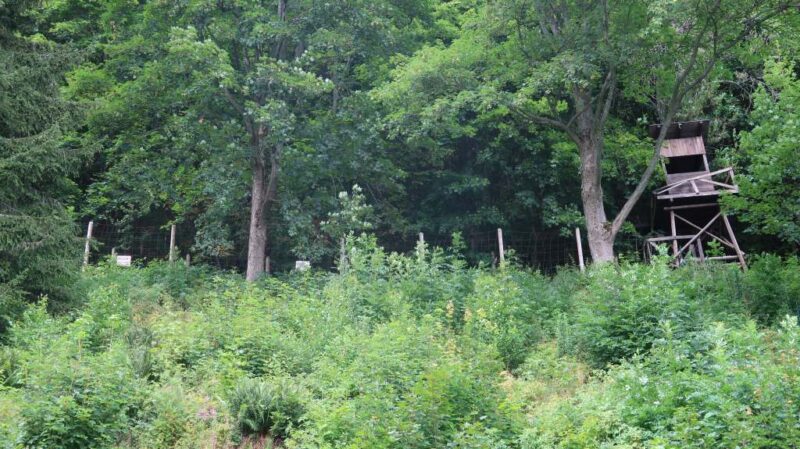
Today, the town is peaceful again, surrounded by forests and mountains. The former prison camps have mostly disappeared into the landscape, leaving behind only scattered foundations, memorials, and a few preserved sites.
Yet the name Jáchymov still carries a heavy meaning in Czech and Slovak history.
Although uranium mining ended here in 1964, the fear connected with the town lasted much longer. During communist rule, simply hearing the words “sent to Jáchymov” was enough to create fear. It represented the possibility of disappearing into a system where punishment, forced labour, and uncertainty became part of everyday life.
The communist regime maintained control not only through prisons and political trials, but also through fear. Among all places associated with political repression in Czechoslovakia, Jáchymov became one of the strongest symbols of what could happen when the state turned against its own citizens.
Today, visitors walking through the quiet forests around Jáchymov may find it difficult to imagine the harsh reality that once existed here.
But beneath the peaceful landscape lies a story that deserves to be remembered—not only as part of Czech and Slovak history, but as a reminder of how fragile freedom can be.


