5 World War II Sites in Bratislava You Should Know About
Bratislava may look peaceful today, but its streets, memorials and forgotten military structures tell a much darker story. During World War II, the city was part of the wartime Slovak State, an ally of Nazi Germany. Its Jewish community faced persecution and deportation, while the final months of the war brought fighting and destruction to the city.
If you are interested in history beyond the usual tourist attractions, here are five places that help reveal Bratislava’s wartime past.

1. Petržalka’s War Bunkers: Preparing for a War That Never Came
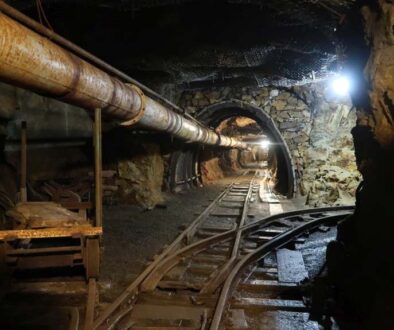
Hidden among cycle paths, fields and patches of woodland in Petržalka are several concrete bunkers built by Czechoslovakia in the 1930s. They were part of a defensive line constructed in response to the growing threat posed by Nazi Germany.
The political map changed dramatically after the Munich Agreement of 1938. Petržalka became part of Nazi Germany, and the bunkers never played the role their builders had intended.
Today, some have been restored by dedicated volunteers and turned into small military museums. B-S-4 Lány is one of the best-known examples, with reconstructed fighting positions and military equipment.
Local tip: Combine a bunker visit with a bicycle ride through southern Petržalka. Check opening times in advance, as access to the museums is limited. Bunker BS-4 is probably the most interesting one.

2. The Holocaust Memorial: Remembering Bratislava’s Jewish Community
At Rybné námestie, close to the Old Town and the Danube, stands a memorial commemorating the victims of the Holocaust. It is a quiet place to pause in an area that once formed part of Bratislava’s historic Jewish neighbourhood.
Before the war, Jewish residents played an important role in the city’s cultural, commercial and intellectual life. Under the wartime Slovak State, anti-Jewish laws stripped them of their rights and property. Thousands of Jews from Bratislava and the surrounding region were deported, many to Nazi extermination camps.
The memorial also evokes the destruction of Jewish heritage in the city. Much of the former Jewish quarter disappeared during later redevelopment, including the area affected by the construction of the SNP Bridge.
Local tip: Visit on foot while exploring the Old Town. Look beyond the memorial itself and consider how much of the city’s Jewish history is no longer visible in the streetscape. Or learn more about it during our Bratislava Identity Bike Tour.
3. Chatam Sofer Memorial: A Sacred Place That Survived
Bratislava was once one of Central Europe’s most important centres of Jewish scholarship. One of its most famous religious figures was Rabbi Moses Schreiber, known as Chatam Sofer, who died in 1839.
His burial place, on the Danube embankment, became part of a historic Jewish cemetery. During the 20th century, the area was dramatically transformed by urban development, and the cemetery was largely destroyed. A group of graves, including that of Chatam Sofer, survived and is now protected within a memorial complex.
Although the site predates World War II by more than a century, it offers an important perspective on the Jewish community whose life was shattered during the Holocaust.
Local tip: This is a religious memorial, not a conventional museum. Visits must be arranged in advance, so check the official information here before planning your trip.
4. Slavín: The Monument to Bratislava’s Liberation
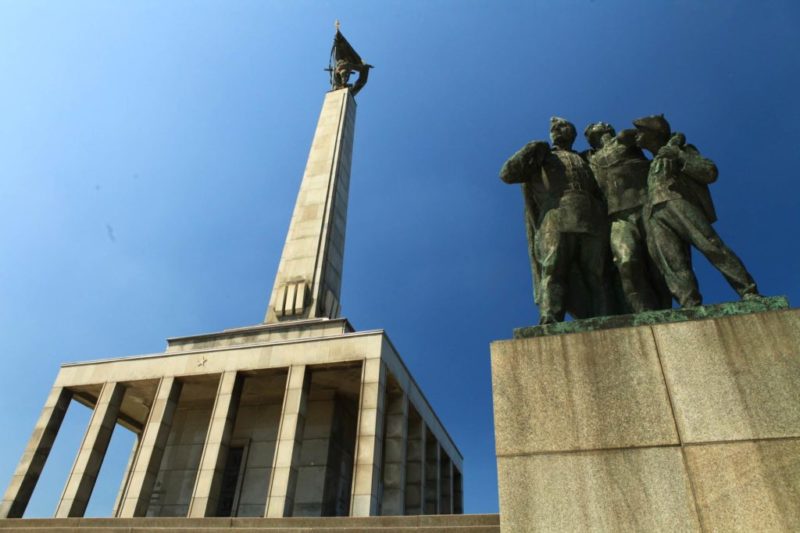
Perched on a hill above the city, Slavín is one of Bratislava’s most striking landmarks. It commemorates Soviet soldiers who died during the liberation of Bratislava and the surrounding region in the spring of 1945. The military cemetery contains the graves of 6,845 Soviet soldiers.
The monumental complex was completed in 1960, during the communist period. Its enormous obelisk and the statue of a Soviet soldier reflect the official commemorative style of the era.
But Slavín’s story is more complex than its monumental appearance suggests. The Red Army helped defeat Nazi Germany and liberate the city, yet the later domination of Czechoslovakia by the Soviet-backed communist regime shaped how many people viewed Soviet monuments.
Today, Slavín is both a place of remembrance and one of the city’s finest viewpoints.
Local tip: Walk up from the Old Town if you enjoy exploring residential streets, or take public transport closer to the hill. Allow time to appreciate both the memorial and the panoramic view. For more insights, join our Post-Communist Bratislava Tour. 🙂

5. SNP Square: Where the War’s Legacy Meets Modern Slovakia
Námestie SNP, or SNP Square, is named after the Slovak National Uprising of 1944, an armed resistance movement against the Nazi-aligned Slovak regime and German occupation.
The uprising began in central Slovakia in August 1944. Although it was eventually suppressed, it remains one of the defining episodes of Slovak wartime history. Resistance fighters included soldiers, partisans and volunteers from different backgrounds.
Bratislava itself was not the main centre of the uprising, but the square provides a useful starting point for understanding the wider story of resistance and the country’s complicated wartime experience.
The square is now a busy urban space filled with trams, shops and cafés. It is easy to pass through without noticing the historical weight carried by its name.
Local tip: Combine SNP Square with a walk through the Old Town and a visit to the Holocaust Memorial at nearby Rybné námestie. If you feel like diving deeper into these topics with a local guide, consider our 20th Century Bratislava Tour.
Discover the History Behind the City
Bratislava’s World War II history is not confined to museums. It survives in memorials, forgotten bunkers, sacred places and the names of everyday streets and squares.
These five sites reveal different sides of the period: the threat of invasion, the persecution of Jewish residents, the destruction of a historic community, the liberation of the city and the legacy of resistance.
If you want to understand how these events shaped modern Bratislava, take time to look beyond the familiar landmarks. Sometimes the most revealing stories are hidden in places you might otherwise walk straight past.